If you draw into the gravel drive just after breakfast, you will normally find Dexter at the fence line, ears punctured, soft brown eyes following your cars and truck. He is not elegant. He is a stout quarter equine with a kind face and the sort of perseverance that only comes from years of steady deal with individuals who need time and calm. He lowers his head when a kid takes a halting advance. He waits if a client ices up at the placing block. He stands, breathing quietly, while a teen counts to 10 and attempts again.
People frequently visualize therapeutic horsemanship as horseback experiences in circles. There is riding, often, but the heart of the job is a relationship. At Dexter's Recovery Hooves, a tiny program set near community, that relationship is the core of equine-assisted solutions. The barn sits close enough that families can follow college, and grownups can insinuate for an early session prior to a commute. The setup issues. Consistency, comfort, reduced traveling time, these make the distinction between a good idea and a sustainable practice.
What healing horsemanship really means
Therapeutic horsemanship is an umbrella term for equine-assisted tasks and horsemanship skills instructed with a healing lens. Some programs are clinical in nature, with certified psychological health carriers integrating equine-facilitated wellness into treatment. Others concentrate on learning and life abilities, instructed by credentialed teachers who recognize just how to shape jobs around demands like focus, sensory processing, and emotional regulation.
If you are envisioning helmets and reins, that is part of it, but many sessions start on the ground. Leading a steed through cones becomes a lesson in pacing, communication, and common interest. Combing a muddy shoulder is responsive input, reciprocal sychronisation, and a possibility to practice sequencing, all wrapped in a soothing rhythm. For a youngster that deals with sound, the barn has its own soundtrack, hooves on packed dirt, swish of a tail, squeak of natural leather, wind with cottonwoods. These are sensory invites, not demands.
I have actually enjoyed a boy with ADHD brighten when Dexter replies to a clear, brief sign, stroll on, provided with a consistent hand. We mounted that as a game, could you get three actions with one ask, then five, after that a turn. The structure aided him hold emphasis without sensation held back. That is ADHD equine learning support at its most natural, using the equine's immediate responses to compensate timing, clarity, and adhere to through.
For a teen on the autism spectrum that thrives on predictability, the routine could look like this, halter from the same hook, lead clipped the same way, quit at the same chalk line, matter 3 breaths, then start. The autism equine learning program at Dexter's Recovery Hooves does not aim to make any individual much less themselves. It aims to provide a location where framework and choice live pleasantly side by side.
Meet Dexter, and why the horse matters
Therapeutic programs fluctuate on the personality and training of their equines. Dexter is the sort of companion you intend to meet, forward enough to respond, consistent sufficient to forgive. He involved the program after a ranch career that gave him track miles and persistence with gateways, puddles, and surprises. He does not startle at a waving jacket. He does tip away if someone obtains loud or pushy, which is its own lesson.
Horses bring two powerful things to equine-assisted training and understanding. First, they are sincere. A steed does not nod along while you speak in circles. He reviews your body and your breath, after that chooses if you really feel safe and clear sufficient to adhere to. Second, they are regulated by movement. Unlike a chair, they do not ask you to rest still and believe your escape of your very own nerve system. Somatic healing with equines utilizes that reality, obtaining the body to lead the brain, not the other method around.
On a useful degree, a steed like Dexter educates limits much better than any lecture. If you walk into his space quick and undistinct, he raises his head and actions away. If you slow your approach, stop at the edge of his shoulder, and take a breath, he lets you in. That is responses you feel, not feedback you are told, and it sticks.
Inside a session, begin to finish
The very first check out is not about confirming anything. It has to do with obtaining topography. We tour the paddocks, smell the hay, try a curry comb on a thick winter season coat. We discuss objectives. Some households come seeking anxiety support with horses, wishing their kid can bring barn tranquility back to school. Others come because a therapist suggested equine-assisted activities as a different treatment for sensory obstacles. Some adults get to a job crossroads and desire equine-facilitated training to figure out stuck conversations at work.
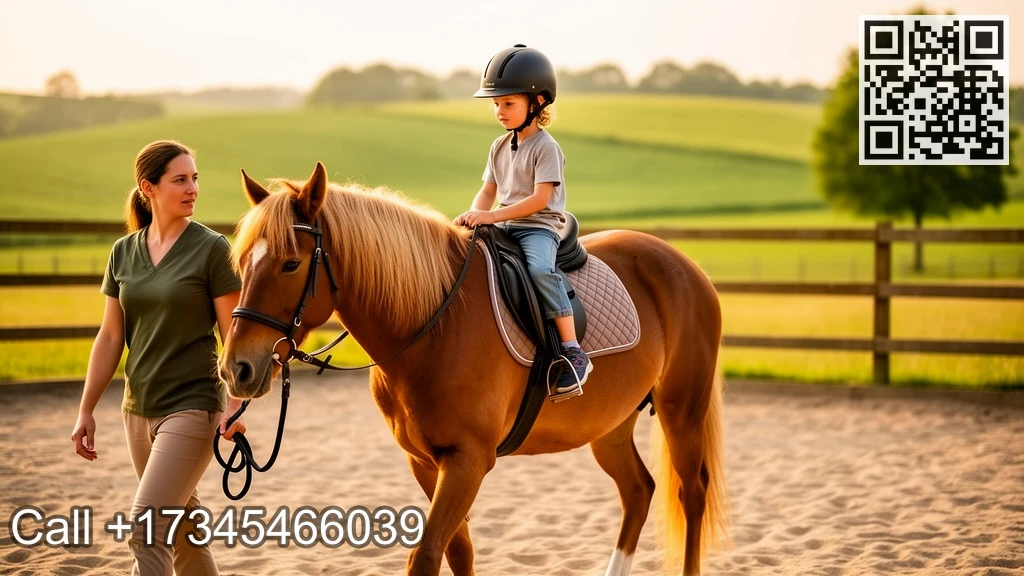
Once we agree on an instructions, we develop a session arc that repeats with little variations. Predictability enables the nerves to relax, and a kicked back system finds out quicker. A regular 50 minute session could consist of haltering, leading, grooming, a focused job on the ground, and, where ideal, placed job. For placed time, helmets are non-negotiable, and a 2nd trainer may stroll beside for backup. On the ground, we show customers how to maintain a safe bubble around the steed, how to read ears and eyes, and just how to set up barriers with a purpose.
Progress is hardly ever direct. One week, a kid who typically prevents touch may spend fifteen mins scratching Dexter's withers with both hands, laughing at the lip quiver. The following week, the same youngster could choose the brush is as well scratchy and just want to lead. That is not a trouble. It is a selection in a place where choices are valued, that makes it much easier to extend the following time.
Parents often ask just how we understand the job works. We track small information. How long might they maintain a job before a break, the amount of clear hints did they give prior to duplicating, how many changes did they take care of without prompting. We go for gains measured in minutes and reps, not jumps to excellence. Over 6 to twelve weeks, it prevails to see a change from two or three mins of focused engagement to 8 or ten. That ten mins, exercised and had, adjustments class and dinner tables.
Why equines help the nerves find neutral
Clinically, steeds are victim animals with a strong startle action coupled with a solid go back to baseline. They check, orient, act if needed, then forage. Individuals under persistent stress and anxiety often skip the last step. We remain braced. In equine-facilitated wellness, we lean right into co-regulation. If you match your breath to Dexter's sluggish exhale while you brush, your very own heart rate can adhere to. If you find a rate that keeps him strolling with a swing with his back, your hips unwind to his rhythm.
This is not magic, it is mechanics. The hips rocks in three aircrafts when seated on a moving steed. That activity can mirror the spinal patterns made use of for strolling. For somebody with reduced muscle mass tone, that input can boost postural activation. For somebody locked in a freeze response, that activity can gently wake a system that neglected just how to move forward. We do not speak about it much with clients unless they desire the why. We established the problems and let the body teach itself.
There are restrictions. Horses are not a suitable for everyone. Some individuals have allergies, some are really scared, some locate the sensory lots expensive on windy days. Great programs adapt. Ground-only sessions are not a lesser option. For a teenager with vestibular level of sensitivity, standing on a placing block and merely positioning a foot right into a brace while holding a hand might be the entire goal for a month. The persistence to honor that speed is part of the work.
For children, from emphasis to friendship
Children come to Dexter for all sorts of reasons. ADHD frequently turns up initially as a tale regarding institution. A child rises and wanders, fails to remember instructions, loses track of valuables. In the arena, we diminish the guidelines and reduce the comments loop. Lead Dexter to the blue cone, quit, pet dog his neck, return. Success is instant and embodied. The task develops working memory, because the horse demands you remember what you asked, and it builds impulse control, since tugging the lead does not make a thousand pound pet move.
For family members navigating sensory distinctions, the barn can be an alleviation because it is unapologetically physical. Alternate treatment for sensory difficulties does not call for a child to rest and make eye get in touch with. It inquires to discover how the brush really feels on a shaggy layer, just how hay smells sweet or messy, exactly how an unguis looks when picked tidy. We construct in quiet areas, a tidy tack space with a soft chair, a vacant stall with a home window for a sight but not excessive noise. Headphones are welcome. Some kids wear gloves. When a youngster claims stop, we stop, and nothing bad occurs. That lesson experiences home.
Autism equine discovering programs differ, but the very best share this feature, the horse forms social communication without compeling it. A child that does not wish to respond to concerns may still reach to hand Dexter a carrot, and in that reach is turn taking, timing, and expecting signs. We model basic language, stroll on, whoa, good young boy, as a rhythm instead of a test. Over months, words commonly expand around those patterns.
Anxiety looks different in youngsters than in grownups, but at the barn it shares a first step, get out of your thinking loop and into a task. Stress and anxiety assistance with equines utilizes framework, choices, and a living companion to interrupt rumination. Standing beside Dexter and matching your breath to his, then taking three actions with each other, is not a motto. It is a technique you can feel.
For adults, quality without a conference room
Equine-assisted training for grownups is not treatment in a standard talk feeling, though numerous find it healing. It is experiential learning with equines aimed at management, communication, and boundaries. If you state you want to move a group toward a new goal however your body telegraphs hesitation, Dexter will not tip off. You learn promptly exactly how to align your words, posture, and intent. The lesson transfers. In my notes, I have a supervisor that could not obtain a team to end up jobs on time. After three sessions of moving Dexter through a pattern without any rope, just body movement, she returned to work and began requesting for clear commitments with days, after that waited without loading the silence. Due dates improved.
Team building with equines can be an eye opener without anyone sitting through a slide deck. A tiny team might be asked to get Dexter to walk through a slim chute of poles without touching him, no halters, no deals with. In ten minutes, you will see who strategizes, who enters, that obtains loud under tension, that hangs back. The debrief is where the value lands. We discuss what made the horse more or less prepared, and the group draws its very own alongside meetings and job strategies. No person needs to be called out by name. The equine already showed the pattern.
Equine-facilitated training fixate the very same concept as the children' work, behaviors are information, and comments ought to be instant and kind. When adults find that equilibrium in the arena, they often carry it into hard conversations at home or at the workplace. Softer shoulders can imply firmer borders, not weaker ones.
Safety, ethics, and the misconception of the wonder cure
A barn is not a clinic, yet it should be run with the same respect for security and approval. At Dexter's Recovery Hooves, we keep clear methods. Closed-toe footwear are needed. Headgears are fitted, not guessed. Saddles are inspected each experience, and girths are retightened after the steed has walked. Steeds get times off and yield time. Procedure end on time so steeds and individuals discover to expect starts and endings.
Ethically, we avoid big assurances. Equine-assisted solutions are a corresponding approach, not a miracle treatment. They can rest alongside job-related therapy, counseling, or medicine. We team up with other service providers when families concur. I have rested on the phone with an institution OT preparing exactly how barn tasks could strengthen bilateral assimilation objectives. That is not attractive, however it works. A kid really feel proud clipping a lead rope correctly, then uses the very same crossed midline activity more efficiently in class art projects.
We additionally take care of the equine's permission. A pinned ear is a no. A relaxed back leg and a soft eye are a yes. If Dexter does not look like he wishes to belong to a session, we listen and pick a various task or a different equine. That choice instructs customers that relationships go both ways which no is not a failure.
What change looks like over months
Progress stories at the barn seldom come covered in dramatic reveals. They sound like this, a moms and dad claims their kid maintained the same breakfast routine three days straight after we practiced a grooming sequence with an aesthetic graph. Or a teacher e-mails to say the student that drummed on the workdesk currently taps a hand on a thigh and breathes, then elevates a hand. Or a grown-up client shares that when a meeting obtained heated, they visualized making area at an equine's shoulder and allow the area clear up before speaking.
We see gains in numbers you can jot down. A client that can stand brushing for 2 minutes now grooms for eight. A customer that needed 5 triggers to stroll a barrier now requires one. Spontaneous positive behaviors raise, unprompted praise for the horse, unasked for lead rope coiling at the end of a session. None of these are analysis standards, but they are practical changes.
Parents appreciate when we translate barn wins to home routines. If a kid finds out that stroll on methods move now, we suggest a home hint for changes that is brief and consistent, shoes on, five minutes, car. If a teen learns that counting three breaths relaxes both them and Dexter, we help them choose a portable variation for test days, hand on desk, 3 peaceful breaths, pencil down, check out the first question.
Cost, time, and remaining local
One reason Dexter's Recovery Hooves attracts constant involvement is area. A half hour big salami after school is practical. We schedule in six to twelve week blocks, generally one session weekly, because once a week repeating seeds long lasting practices. Prices differ by area, but for tiny programs similar to this, you can expect exclusive sessions to be priced similar to specialized lessons or therapy copays. Some households budget by rotating siblings, so both obtain time throughout a season.
We work with a few neighborhood nonprofits to supply limited scholarships. We also https://riverdimz749.yousher.com/barnside-advancements-equine-assisted-coaching-for-life-transitions instruct families how to carry technique home at no additional expense. A 5 minute brush and breathe routine in a yard with a pet or even a packed pet is not the same, however the structure and breath still help.
Preparing for your initial visit
- Wear closed-toe footwear with a walk, and garments you do not mind obtaining dusty. Bring water, sun block, and a coat, the climate can change also within an hour. If sensory sensitivity is a concern, pack earphones, handwear covers, and a preferred fidget. Share medications and allergies on the consumption form so we can prepare for breaks or direct exposure limits. Arrive 10 mins early to resolve in and examine the session strategy at a calm pace.
How to vet a program without obtaining lost in jargon
Not all equine programs use the exact same solutions, and the language can get dirty. Equine-assisted activities normally focus on ability building and wellness, frequently led by certified teachers. Equine-facilitated wellness and equine-assisted coaching can involve mental health and wellness or leadership work, led by certified professionals or experienced trains trained to make use of horses morally in development work. The details matter less than the fit for your goals and the safety society you observe on site.
Questions to ask when choosing a program:
- What training do the personnel hold, and just how do they preserve proceeding education? How do you analyze fit and set objectives for clients like me or my child? What are your security methods for helmets, tack checks, horse selection, and weather? How do you track progress and communicate it to family members or clients? What is your technique when a client or an equine says no to an activity?
Listen for answers that are specific, tranquil, and not defensive. Watch a session if you can. Notification if the steeds look brilliant and relaxed, not shut down. Notice if personnel usage clear, type language. The barn ought to feel like an area where errors are anticipated and managed with dignity.
When the arena ends up being a classroom for life
The best sessions with Dexter end with a little victory and a feeling of enough. Perhaps the horse stepped voluntarily through a brand-new obstacle after you adjusted your body one inch. Perhaps a youngster searched for and said, he paid attention to me. Possibly you uncovered your voice lands best when it is low and steady. Individuals carry those minutes out to their vehicles and back into the remainder of their week.
Equine job is not about riding off right into a sunset. It is about finding out to stand, take a breath, ask clearly, wait, and notification. It has to do with realizing that tranquility is not a present you obtain, it is a method you build, with support. At a location like Dexter's Recovery Hooves, near home, that exercise enters into the community. You begin to identify the rhythm, the problem of crushed rock under tires, the snort from the arena, the means time stretches when your hand hinges on a warm neck.
The barn will certainly still exist when progression dips, and development constantly dips. That is why having equine-assisted solutions regional matters. You do not need an excellent week to come. You require enough guts to show up, and an equine like Dexter waiting at the fence, prepared to satisfy you where you are.