The first time Mia stood close to a horse, she could not stop turning her hoodie drawstrings. She was fifteen, bright, and embeded a loop of suppose that hijacked her breath in congested corridors. The gelding in front of her flipped an ear, changed his weight once, then sighed. That sound, long and unhurried, cut through the noise in her head better than the dozen times I had actually said just breathe. It was an ordinary minute on a crushed rock apron behind the arena, but I have seen that same reset begin a hundred various means for both teens and grownups. Steeds do not talk. They do not deal with. They show, and in their presence, individuals usually discover steadiness they can really feel in their bones.
How steeds fulfill anxiety where it lives
Anxiety rarely sits in one area. It turns up as competing ideas, a thumping heart, limited shoulders, and a sensitivity. Steeds, as victim animals, are developed to read tension. Their survival depends upon seeing whether the herd is risk-free, and if an individual strolling toward them is based or running hot with cortisol. That level of sensitivity becomes powerful in restorative horsemanship and equine-assisted services, since it invites prompt feedback without judgment.
Touch a smooth shoulder, and you can feel a pulse slow under your palm. Set a border with a lead line and your body, and you may enjoy an equine examination, after that work out into your request. Step into the field humming with nerves, and a horse might tip away, mirroring your press of energy. Step back, soften your knees, drop your breath right into your tummy, and the equine may turn an ear towards you, after that turn to fulfill you. This online biofeedback aids clients discover what calmness in fact feels like, not as an idea but as weight in the heels and area in between the ribs.
The work is experiential discovering with horses. By design, it is untidy, nonverbal, and honest. It never ever replaces healthcare where medication or injury therapy is indicated, yet it typically enhances those supports. I have actually viewed clients utilize abilities from equine-facilitated wellness to browse panic in the carpool line or plan for a tough conference. The embodied memory takes a trip with them.
What a session looks like, without the mystique
First sessions are silent. We talk by the fence, or while brushing a steed who is currently half asleep. I ask what anxiety feels like when it appears, and we trade specifics. For some, it is a buzzing in the lower arms. For others, it is a clench at the base of the skull. We stay grounded in the body, not simply the tale. Somatic healing with equines starts long before any person swings into a saddle. As a matter of fact, the majority of anxiety support with horses takes place on the ground. Haltering, leading, and border work change stances and patterns faster than any type of pep talk ever has.
We established purposes that fit the person before me. A teen might wish to handle game-day nerves or intermediate school group tasks. An adult may be fending off Sunday dread or the awaiting spike that strikes before public speaking. Some customers prefer equine-assisted mentoring, with a framework of goals and accountability. Others lean toward equine-assisted tasks that center visibility, connection, and rhythmic movement. Both tracks can be healing, particularly when handled by a credentialed professional who knows when to push and when to pause.
When clients ride, we keep the focus on physiologic regulation, not efficiency. The stroll has a four-beat cadence that frequently coaxes a steady breath pattern. Publishing at the trot can feel like drumming out jitters through legs and core. I have seen grownups that showed up clenched and regretful loosen up grip by grasp up until their hands moved like water on the reins. The factor is not an ideal circle. It is seeing, with each other, when the nerve system shifts.
For teens that feel everything all at once
Adolescence multiplies anxiousness. Social dynamics, institution needs, and a mind still electrical wiring itself into an adult form, all of it accumulates. Equines break the loop in 2 useful means. First, teens get prompt comments that is not social. A 1,100 pound companion does not care about grade point average or Instagram. Horses register harmony. If a teen states I am penalty with gritted teeth, the equine will likely disagree by stepping back or supporting. That discrepancy comes to be the lesson, and it is gentler than having a parent point it out for the hundredth time.
Second, teens experience competence they can gauge. Haltering correctly, guiding a steed with a pattern of cones, or brushing a sloppy winter season coat into a tidy shine, each task has a start and an end. Little success build up. I have seen a teen that disliked group operate in institution lead a gelding through a figure, pause, and beam of light due to the fact that she and the steed made a strategy that functioned. That feeling does not erase anxiety, however it widens the lane.
For teenagers with sensory level of sensitivity or social overwhelm, Alternate therapy for sensory obstacles that centers horses can be a steadying anchor. Barn sounds are substantial, predictable, and distinctive. The odor of hay, the crisis of unguis on gravel, the brush strokes down a long back, these inputs arrange as opposed to flood the detects for numerous pupils. ADHD equine discovering support also utilizes motion to harness attention. Asking a horse to match your walk, quit with your breath, or pivot around a cone calls for timing and existence, which can be less complicated to gain access to moving than at a desk.
For adults that carry unseen weight
Adults usually get here after trying a lot of various other points. They are competent in work and family life, however they bring a covert draft of concern, looping thoughts concerning target dates, caregiving, and the news cycle. Horses disrupt the story in a manner health clubs and screens do not. You can not half take notice of an equine and anticipate collaboration, which means you have to park multitasking at eviction. That single-task focus is a relief.
Equine-facilitated mentoring fits well for specialists wrestling with leadership stress and anxiety. Horses provide nonverbal information about just how we send signals with position, voice, and follow-through. If your team overlooks uncertain directives, the very same pattern shows up in the arena. Ask a horse to move its shoulder with an unclear demand, and you might get a blank gaze. Clarify your ask with a step, a breath, and a constant hint, and you will likely see motion. Team building with steeds scales that insight to teams. Coworkers run a simple ground course with one horse and no talking. They leave recognizing that jumps to action, who checks the map, that relieves torn edges, and exactly how they can trust each various other under pressure.
I still consider a CFO that showed up convinced she misbehaved at delegation. In the field, she tried to relocate a mare via a collection of posts by doing everything herself, hustling to obstruct and drive. The mare mostly enjoyed her run. When she paused long enough to employ a teammate, asked with quality, and then stepped back, the mare went through with absolutely no dramatization. The CFO left with a brand-new psychological photo of leadership that did not call for fatigue to be effective.
Safety, range, and what to ask before you start
Horses are huge and powerful. Excellent programs treat that fact with respect, not be afraid. In practice, this suggests well-trained horses, clear borders, and facilitators that keep the job inside their skills. There are a number of specialist paths in this area. Some service providers concentrate on healing horsemanship, building riding skills and self-confidence with adaptive methods. Others provide equine-assisted services along with medical care, commonly with a licensed psychological health expert present. Still others use equine-facilitated wellness or mentoring, which does not identify or treat, yet targets development, stress management, and leadership.
Medication and case histories issue. If you or your teenager has a condition that influences balance, bone thickness, or seizure risk, installed work may not be recommended or may require added preventative measures. Several clients who cope with anxiousness additionally cope with injury histories. For some, the relational collaborate with equines feels corrective and comforting. For others, a steed's dimension or an unexpected snort can increase arousal. A skilled facilitator moves in small steps, checks for consent at each turn, and recognizes how to downshift a session when the nerves claims not today.
It is likewise reasonable to ask about horse well-being. Burned out horses do not provide great comments. Seek programs that limit the number of sessions per horse, provide yield and herd time, and build rest days into the timetable. The very best partnerships come from healthy, eager steeds with soft eyes and area to be themselves.
A straightforward workout that frequently changes everything
Below is a ground-based technique I make use of with both teens and grownups. It incorporates somatic recognition with clear interaction, and it functions equally as well in a round pen as it performs in a rectangle-shaped arena.
- Stand at the equine's shoulder, one arm's size away, lead line in a soft U form, and notice your feet on the ground. Exhale up until you feel your ribs drop. Without moving your hands, shift your weight somewhat onward, take a step, and welcome the steed to walk with you. If the horse hesitates, time out, take a breath, and attempt again with a clearer step. After 3 to 5 steps, visit softening your knees, breathing out, and believing sluggish. Ask your hands to be last, not initially. Notice exactly how the horse responds. Change direction by tipping your feet first, after that bringing the equine through a mild arc. Keep your shoulders relaxed and your breath steady enough to talk in full sentences. End by stalling together for ten breaths, counting just on the exhale. If your mind wanders, bring it back to the guide of the horse's barrel with each breath.
Clients report that this sequence becomes a mobile template. Commute running hot, teeth squeezed on the guiding wheel, and they bear in mind to breathe out initially, then act. Tough conversation ahead, and they readjust stance before words.
What the study and real-world results say
This field rests at the conference factor of professional study and barn materialism. Researches over the previous years have actually documented reductions in anxiety and stress and anxiety pens in individuals joining equine programs, specifically those entailing organized foundation, grooming, and placed walking. Not every research is huge or randomized, and approaches differ. That stated, pre to publish adjustments in standardized stress and anxiety procedures in the variety of 10 to 30 percent are common in program evaluations I have actually read or participated in. Salivary cortisol has trended down in some tiny mates after sessions that consisted of grooming and peaceful leading.
Beyond numbers, results I track include fewer institution avoidance days, boosted sleep-onset in teenagers who formerly lay awake knotting for an hour, and grownups reporting that they lastly felt a pre-verbal feeling of security once more. I deal with these records as information factors, not assurances. Some customers make quick gains, after that plateau. Others warm gradually, after that transform an edge around session six when the partnership with a particular equine deepens.
Evidence also shows that uniqueness and nature exposure by themselves reduced anxiety for some people. It matters that barns scent like hay and leather, not antibacterial. It matters that swallows skim the field rafters and that wind tags your cheek under an open sky. These components are not one-of-a-kind to equine programs, yet equines make people reduce sufficient to observe them.
When anxiety overlaps with ADHD and autism
Attention, law, and sensory processing intersect in manner ins which old-school tags miss. I deal with teenagers and grownups that have ADHD, autism, or traits that matter more than the tag. In ADHD equine finding out support, motion comes to be medication. A customer may keep an equine at a stroll while weaving a serpentine via cones, counting breaths on the long sides and calling one specific noise on the short sides. The task trains interest to oscillate deliberately as opposed to ping.
For clients joining an autism equine finding out program, predictability and selection are essential. We establish routines that cue safety, like starting with the exact same pet grooming series or strolling the border together before any kind of requests. Social interaction grows in parallel with equine communication. A client who finds eye get in touch with hard could track an equine's ear rather, then move that going to behavior to a human partner in time. I such as to pair a felt-sense vocabulary with horse actions. Quiet body, loose lip, weight on a back leg implies gone for the steed. Warm hands, low shoulders, deep breath means settled for us. Shared language cuts anxiety.
Alternative treatment for sensory obstacles, in this context, does not imply preventing input. It implies picking the right dose. Rhythm at the stroll arranges. The pressure of a curry comb relaxes some bodies while a soft brush fits others. The facilitator expects indications of overload or underwhelm and adjusts. Being able to say way too much or I require much more belongs to the work.
How coaching and wellness differ from therapy, and why it matters
People use terms freely, which can be complex. Here is how I sort them in method. Equine-assisted services is the umbrella term that covers many approaches. Healing horsemanship boosts riding and horsemanship abilities, usually with adaptive approaches for physical or cognitive distinctions. Equine-facilitated wellness facilities tension management, self-awareness, and relational skills, normally in non-clinical setups. Equine-assisted coaching and equine-facilitated coaching target performance, leadership, and objective accomplishment. Some programs weave components of all these, but extent matters. If you are proactively handling a stress and anxiety condition with anxiety attack, a mental health and wellness expert on the group can be smart. If you wish to expand as a manager, coaching may be a far better fit.
Ask service providers concerning their training and just how https://www.hhooves.com/ourcoaches they take care of escalations. If a client dissociates or has a panic spike, do they have a strategy that keeps both human and steed risk-free while supporting the client back to baseline? Clear methods are not indicators of strength. They are indications of care.
What it sets you back, and how to make it workable
Pricing differs by area, center expenses, and staffing. In my location, personal sessions run 75 to 175 dollars for 45 to 60 minutes. Group sessions lower prices, typically touchdown in between 40 and 90 bucks per person. Some programs partner with nonprofits to fund care for teens or offer moving scale ports for adults. Insurance coverage reimbursement for equine-specific services is still inconsistent, though some clients can utilize health and wellness savings accounts if the work is nested under psychological health treatment plans.
Frequency depends upon goals and budget. Weekly sessions for 6 to 10 weeks create energy, after that many clients shift to twice monthly or regular monthly maintenance. I choose time-limited blocks with clear check-ins instead of open-ended for life. Stress and anxiety is wily. It aids to establish landmarks, celebrate wins, and make a decision when to pause.
A short list for your first visit to the barn
- Closed-toe shoes with step, breathable layers, and a jacket you can connect at the midsection if you warmth up. Water, and a snack with protein if you often tend to obtain lightheaded when nervous. A technique you currently utilize to work out, even if it is imperfect. Box breathing, a word you duplicate, or a grounding cue. An honest conversation with the facilitator regarding triggers and what helps when you start to spiral. Permission to claim no, time out, or change the plan. Permission is not an one-time type. It is ongoing.
Arrive five to ten mins early. Listen to the crushed rock underfoot. The session starts the moment you open up the gate.
What development resembles when it is real
Real adjustment rarely looks remarkable. A teenager that made use of to bolt from the class could message that she remained for the entire team task, heart racing but feet planted. A grownup that terminated strategies when anxiety flared might see the very early signs and pick a stroll with the dog rather than three hours of scrolling. In the barn, development shows up in the speed of the exhale, in a horse that volunteers to walk next to a customer without constant demands, in peaceful hands.
Setbacks take place. Holidays, exams, discharges, illness, every one of life will certainly test the system. When anxiousness rises, the barn ends up being a laboratory once more. We shorten the exercise, make the ask simpler, and commemorate one tidy border or one breath that lands. Equines remember you even when your nerve system is not at its best. That solidity is not an allegory. It is relationship.
Finding a program that fits
Look for a place that feels like human beings and horses really like each other. It receives the eyes, in how staff welcome each equine by name, and in whether laughter lives close to emphasis. Visit the center. Ask the amount of sessions each steed does per day, exactly how they turn work, and what proceeding education and learning staff pursue. If your demands are scientific, ask which licensed companies are included. If you desire growth and leadership development, ask just how equine-assisted coaching defines success and steps it.
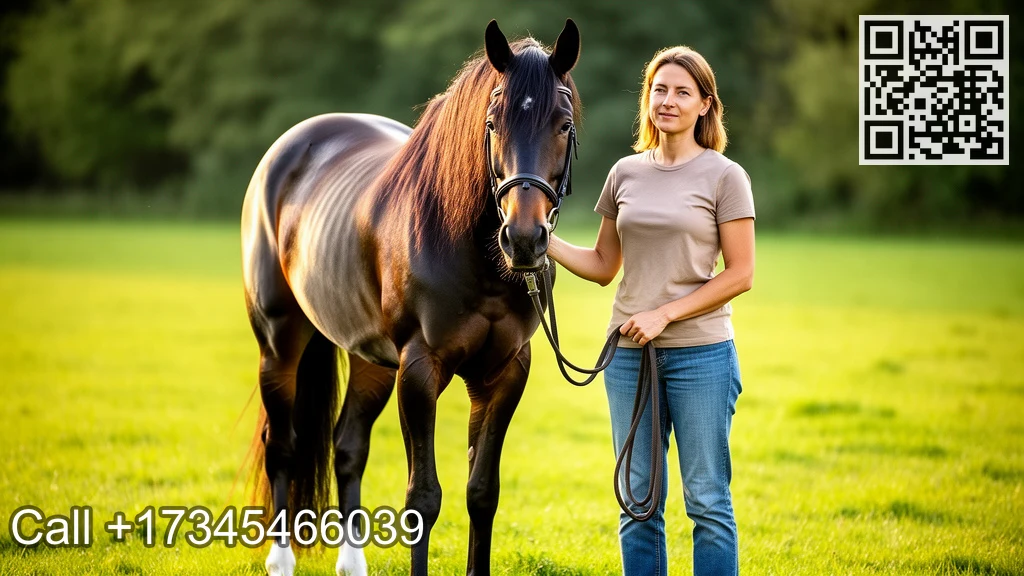
Trust your body. If you exhale in the parking lot, that is information. If your shoulders crawl up around your ears by the placing block, that is information also. You are enabled to shop around. The fit issues as much as the method.
Why it works, in plain terms
Anxiety grows in forecast and evasion. Equines disrupt both. They are too straightforward to let you pretend you feel fine and too huge for you to control with nervous strategy. You need to turn up, take a breath on purpose, and make simple, clear requests. You learn that your body can move your mind, that a living partner reacts to your smallest cues, and that you can stand in a paddock on a Tuesday and feel fine. Not perfect. Okay.
Mia, the teen with the hoodie drawstrings, currently schools a tranquil chestnut gelding over poles when a week. She still obtains spikes before examinations. When they hit, she remembers the equine's long sigh, plants her feet, drops her breath, and chooses her following ask. That is the quiet heart of equine-facilitated health. Not a grand fix, yet a practiced solidity you can accomplish of the arena and right into a life that maintains moving.
Horses repay quality with trust fund. Individuals do as well. In that exchange, stress and anxiety loses a few of its grasp, and area opens up for the components of you that know just how to lead, attach, and rest.